Petrochemicals
Petrochemicals are chemical products derived from petroleum or natural gas. They are the building blocks for a vast array of materials used in modern life, including plastics, fertilizers, synthetic fibers, and pharmaceuticals.
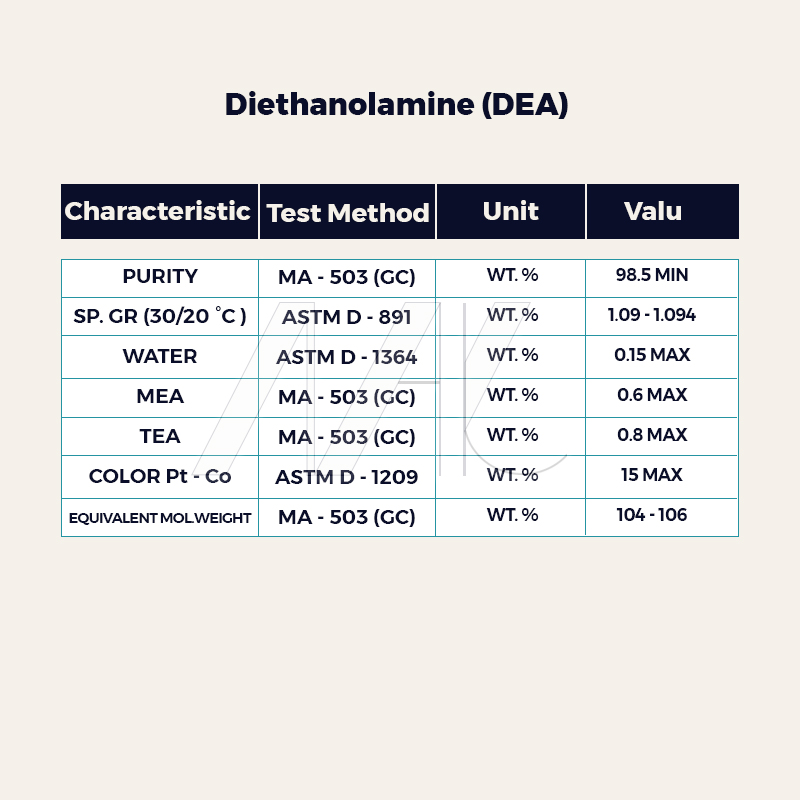
Diethanolamine (DEA)
DIETHANOLAMINE is obtained from the reaction between ammonia and ethylene oxide. DIETHANOLAMINE has a low volatility at room temperature, is hygroscopic, presents an ammoniac odor, and can appear in solid or liquid form depending on the temperature and the purity grad.
Application areas
Detergents:
DIETHANOLAMINE is recommended as a component in detergent formulations for laundry and dishwashing, degreasers, multiple-use detergents, and disinfectants. DIETHANOLAMINE can also be used as a neutralizer agent in formulations of car wash shampoos, degreasers in general, wax removers, and corrosion inhibitors.
Agrochemicals:
DIETHANOLAMINE is used as a neutralizer agents for anionic emulsifiers. DIETHANOLAMINE can be used in the preparation of agricultural compounds obtained from 2,4D acid (2, 4 dichloro phenoxiacacetic ) and DIETHANOLAMINE can be used in the synthesis of glyphosate.
Treatment of gases:
Ethanolamines can be used to treat natural gas and petroleum residual gas in the absorption of carbon dioxide. DIETHANOLAMINE is recommended for the treatment of vapors with a high content of hydrogen sulfide.
Other uses:
DIETHANOLAMINE is recommended as a synthesis intermediate for the manufacture of corresponding alkanol amines due to its reaction with fatty acid or coconut oil. As a consequence of its properties, this product can be used in various industrial segments such as detergents, lubricant oils, products for hygiene and personal care, flotation of minerals, etc. products, dispersing agents for glues, gums, latex and photographic developers, accelerators of rubber vulcanization, corrosion inhibitors, pH
controllers, synthesis intermediates, lacquer, paint, wax and polisher wetting agents, polymerizing agents, and catalysts for polyurethane resins.
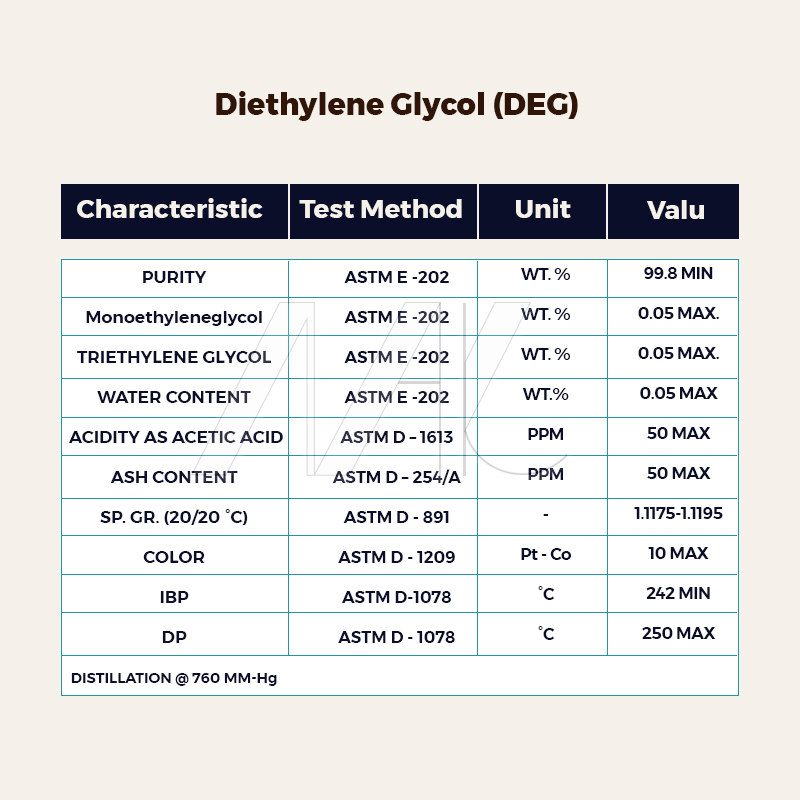
DI ETHYLENE GLYCOL ( DEG )
DIETHYLENEGLYCOL obtained from the reaction of ethylene oxide and MEG. It is a clear, transparent and odorless liquid that can be mixed with water in any proportion.
Application areas:
- Resins :
DIETHYLENEGLYCOL is used as synthesizing agent for alkyd resins as well as saturated and nsaturated polyester. DIETHYLENEGLYCOL is used in the synthesis of polyurethane resins, as a
coalescence agent, anti-freezing agent in polymer and/or acrylic homopolymer emulsions, chain extender and agent in the dispersion and wetting of unsaturated polyester resins.
- Synthesizing agents :
DIETHYLENEGLYCOL can be used as synthesis intermediate. DIETHYLENEGLYCOL esters are used as emulsifiers. DIETHYLENEGLYCOL esters with fatty acids (oleic, stearic, lauric, etc.) are used as emulsifiers and plasticizers of polymers.
- Wetting and plasticizing agents :
DIETHYLENEGLYCOL can be used as wetting and plasticizing agent in the production of cellophane, glues and adhesives, textiles, printing ink, leather, cosmetics, paper and pharmaceutical products.
- Coolant additives :
DIETHYLENEGLYCOL can be used in antifreeze formulations in proportions of up to 10% together with MONOETHYLENEGLYCOL. The various quantitative ratios between these components are suitable for specific applications in the field of industrial refrigeration.
- Cement additive :
DIETHYLENEGLYCOL can be used as an auxiliary additive in cement milling. It can be used in extremely small proportions to produce significant results, increasing the hourly production of cement without increasing the energetic demand on the system.
- Brake fluids :
DIETHYLENEGLYCOL can be used as secondary solvent in brake fluid formulations. This product is also used to avoid the excessive swelling of rubber in the hydraulic system.
- Other uses:
Ethyleneglycols can also be used in the formulation of printing ink, in the treatment of gases, in the formulation of fire-resistant hydraulic fluids, in the formulation of cutting oils, in the formulation of surface polishers, in the formulations of agrochemicals, in the extraction of solvents, in the manufacture of pigmented pastes and putty for walls, and in the synthesis of explosives.
Hexane
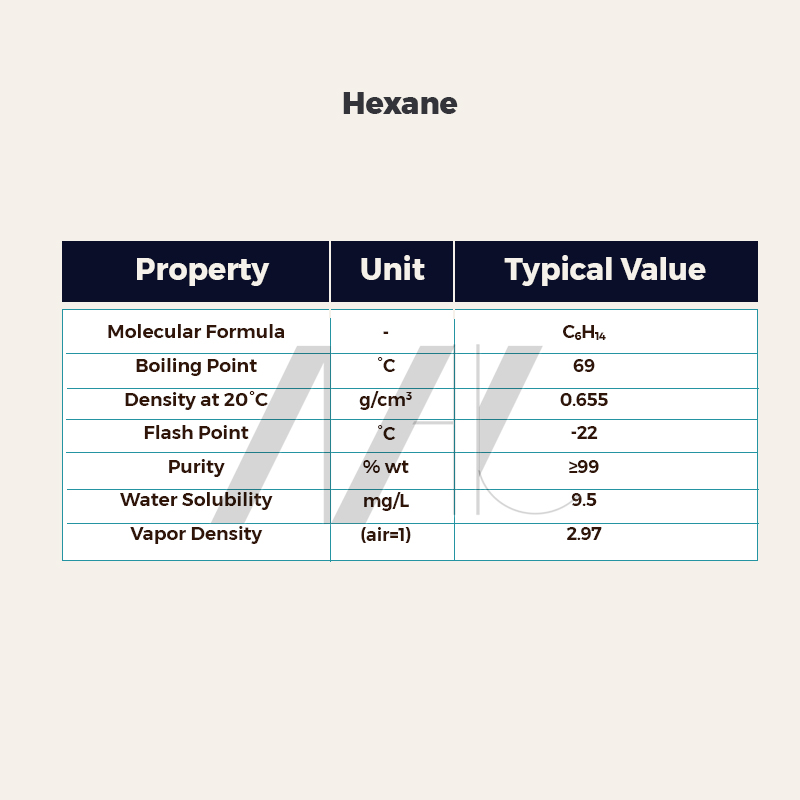
Hexane is a hydrocarbon consisting of six carbon atoms in an unbranched chain, with the molecular formula C₆H₁₄. The term may refer to any of the five structural isomers with this formula or a mixture of them. It is a non-polar molecule, meaning weak intermolecular interactions occur between its molecules in the pure liquid state.
This hydrocarbon is a key component of gasoline. It is also a highly volatile, flammable, and toxic chemical, classified as a byproduct of crude oil. Hexane isomers are commonly used as organic solvents due to their strongly non-polar nature.
Application
- Oil extraction from seeds (soybean, canola)
- Degreasing agent for industrial parts
- Adhesive production for textiles/leather
- Solvent in paint, varnish, and ink formulations
- Laboratory reagent for nonpolar reactions
- Biodiesel production
- Cleaning agent formulations
Product Features
- Highly effective nonpolar solvent
- Low boiling point for easy separation
- Excellent degreasing capability
- High volatility for rapid drying
- Suitable for lipase-catalyzed reactions
- Low water solubility
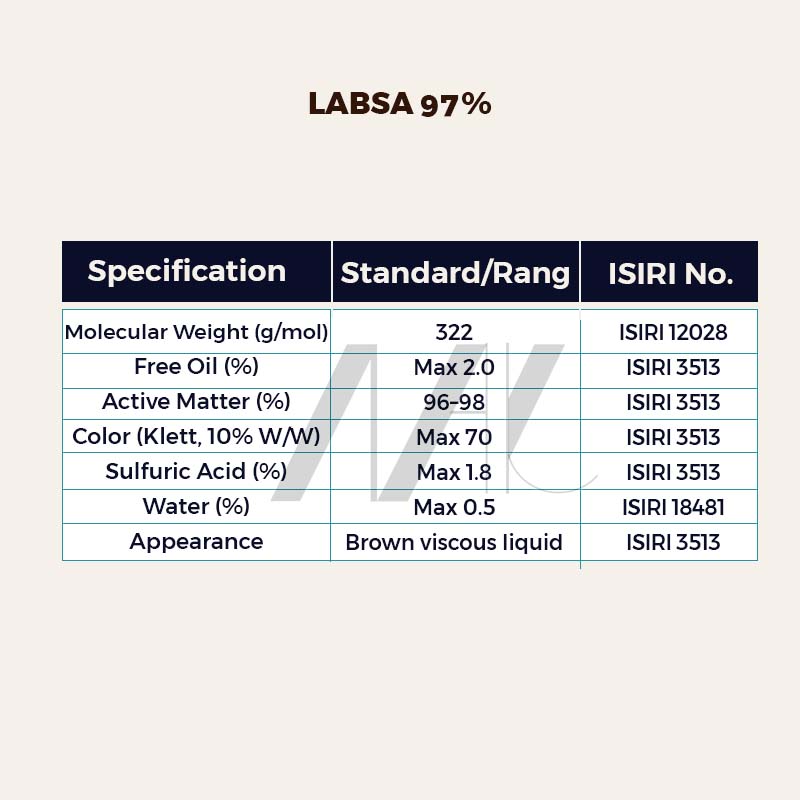
LABSA 97% (Linear Alkyl Benzene Sulfonic Acid)
Linear Alkyl Benzene Sulfonic Acid (LABSA) is one of the most essential raw materials in the detergent manufacturing industry. As a strong anionic surfactant, it plays a key role in providing detergency, stain removal, and degreasing properties to cleaning products.
Applications
LABSA is widely used in the formulation of many detergent products, including:
- Dishwashing liquids
- Laundry powders
- Industrial cleaners
Thanks to its high solubility in water and excellent emulsifying properties, LABSA delivers highly effective performance in these applications.
Main Features of LABSA 97%
- Powerful cleaning ability
- Effective stain removal and cleansing
- Strong emulsifying agent
- Acts as a viscosity enhancer
- Compatible with other surfactants
- Offers antibacterial properties
Consumer Industries
- Detergent manufacturing
- Paints and resins industry
- Chemical and agricultural fertilizers
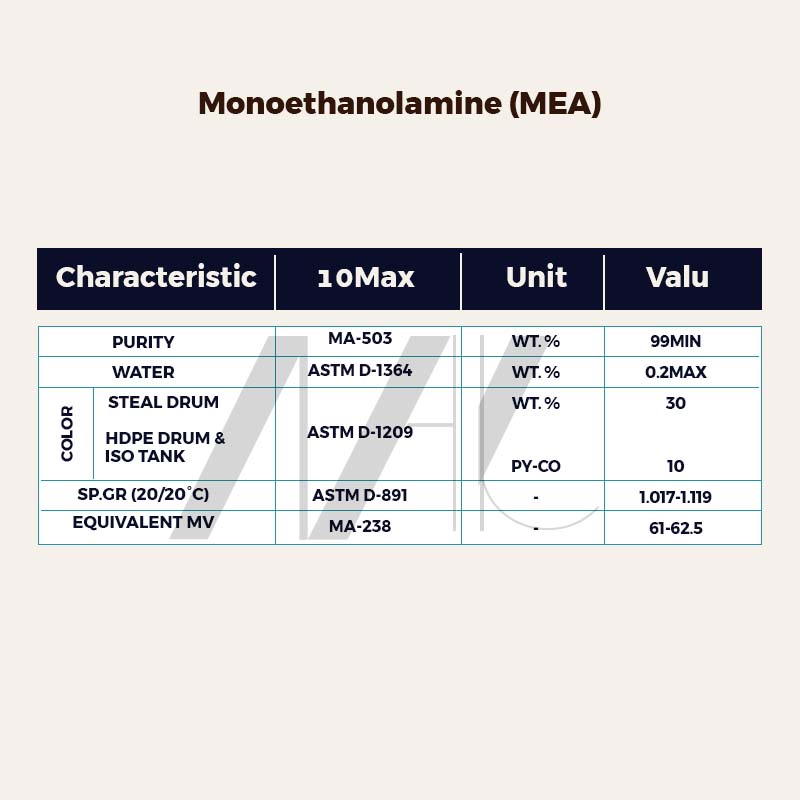
Monoethanolamine (MEA)
MONOETHANOLAMINE was obtained from the reaction between ammonia and ethylene oxide. MONOETHANOLAMINE has a low volatility at room temperature, is hygroscopic, presents an ammoniac odor and can appear in solid or liquid form depending on the temperature and the purity grade.
Application areas
Detergents:
MONOETHANOLAMINE is recommended as a component in detergent formulations for laundry and dishwashing, degreasers, multiple-use detergents, and disinfectants.
MONOETHANOLAMINE can also be used asa neutralizer agent in formulations of car wash shampoos, degreasers in general, wax removers and as corrosion inhibitors.
Agrochemicals:
MONOETHANOLAMINE is used as a neutralizer agent for anionic emulsifiers.
Treatment of gases:
Monoethanolamines can be used to treat natural gas and petroleum residual gas in the absorption of carbon dioxide. In gas systems containing carbon dioxide, MONOETHANOLAMINE can be used as a selective absorber and plays an important role in the production of ammonia, liquid carbon dioxide, and dry ice permitting regeneration in the latter cases.
Other uses:
MONOETHANOLAMINE is recommended as a synthesis intermediate for the manufacture of corresponding alkanol amides due to its reaction with fatty acid or coconut oil. As a consequence of its properties, this product can be used in various industrial segments such as detergents, lubricant oils, products for hygiene and personal care, flotation of minerals, etc.
Ethanolamines can also be used in the formulation of pharmaceutical products, dispersing agents for glues, gums, latex, and photographic developers, accelerators of rubber vulcanization, corrosion inhibitors, pH controllers, synthesis intermediates, lacquer, paint, wax, and polisher wetting agents, polymerizing agents and catalysts for polyurethane resin.
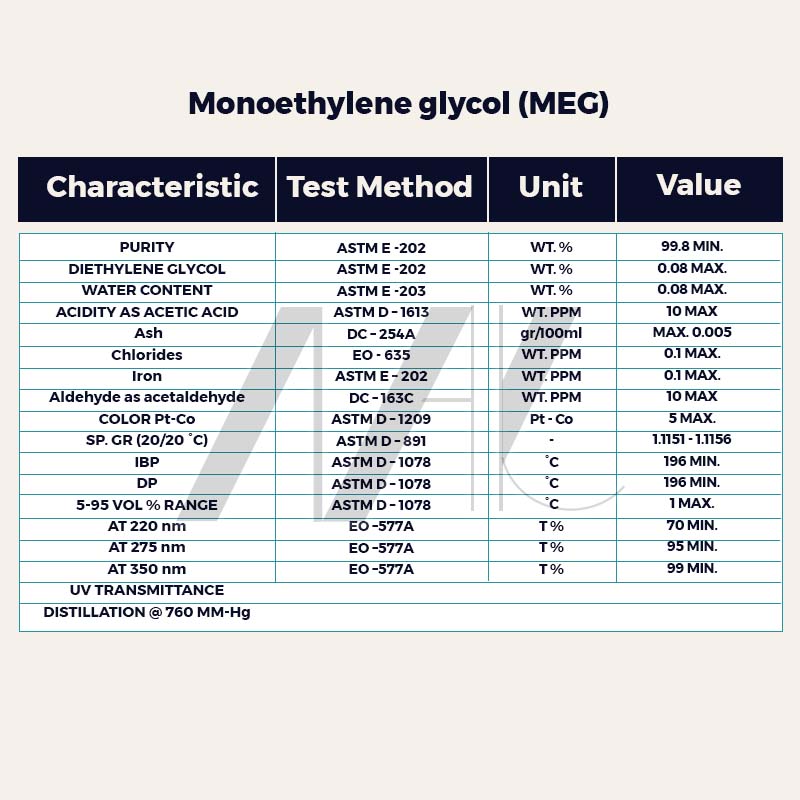
MONOETHYLENE GLYCOL ( MEG )
MONOETHYLENE GLYCOL obtained from the reaction of ethylene oxide and water. It is a clear, transparent and odorless liquid that can be mixed with water in any proportion.
Application areas:
• Polyester :
Polyester fibers, threads, films and polyester resins are produced from the reaction between MONO ETHYLENE GLYCOL with dibasic acids and their esters, such as terephthalic, oxalic, succinic, glutamic and adipic acids among others.
The polyterephthalate fibers of MONOETHYLENEGLYCOL are widely used in the textile industry and known commercially as Tergal, Terilene, Dacron and Trevira among other names. Due to their high mechanical resistance, excellent dielectric properties and low hygroscopicity, polyester films are used to produce photographic films, magnetic tapes and packaging.
MONOETHYLENEGLYCOL is used in the synthesis of polyethylene tereftalate (PET), which is frequently used in the packaging of foodstuff and carbonated beverages.
Resins :
MONOETHYLENEGLYCOL is used in the synthesis of unsaturated polyester resins, alkyd resins, rosin esters and polyurethane resins. It acts as a coalescence and anti-freezing agent in emulsified resins. Used
together with adipic acid and other glycols, rubber with a high chemical and abrasion resistance can be synthesized. Resins produced from oleic acid and MONOETHYLENEGLYCOL, known as alkyd resins, are used frequently in the industry of paints and varnishes.
• Wetting and plasticizing agents :
MONOETHYLENE GLYCOL can be used as wetting and plasticizing agent in the production of cellophane, glues and adhesives, textiles, printing ink, leather, cosmetics, paper and pharmaceutical products.
• Coolant additives :
MONOETHYLENE GLYCOL is used in industrial refrigeration circuits and internal combustion engine coolant systems with the purpose of raising the boiling point and reducing the freezing point of the solution used. For this application, an anticorrosive must be added to MONOETHYLENEGLYCOL to prevent the system from suffering water corrosion.
DIETHYLENEGLYCOL can be used in antifreeze formulations in proportions of up to 10% together with MONOETHYLENEGLYCOL. The various quantitative ratios between these components are suitable for specific applications in the field of industrial refrigeration.
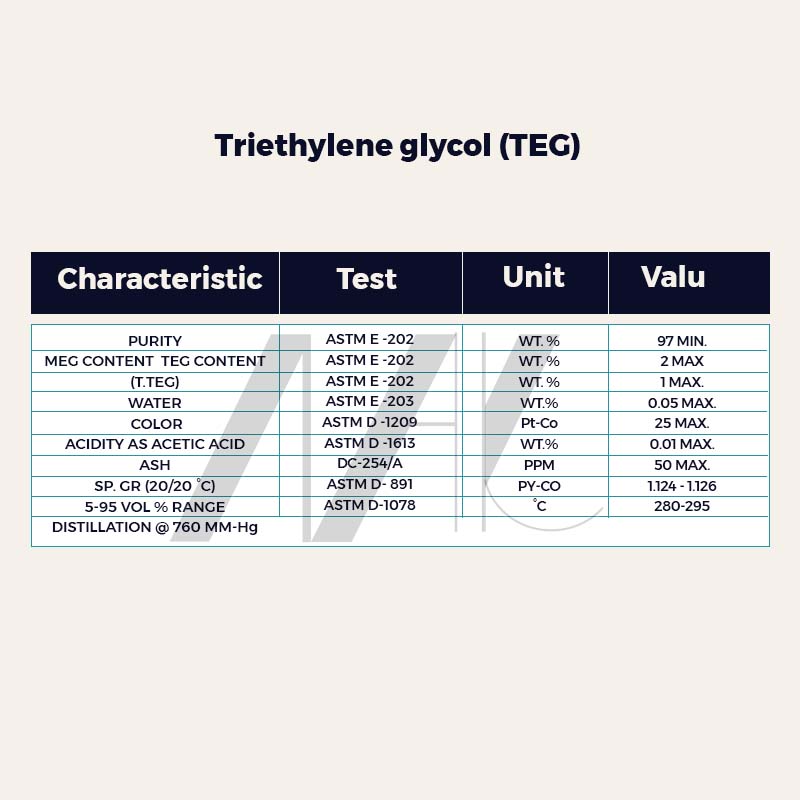
TRIETHYLENE GLYCOL ( TEG )
TRIETHYLENE GLYCOL obtained from the reaction of ethylene oxide and DEG. It is a clear, transparent and odorless liquid that can be mixed with water in any proportion.
Application areas:
• Resins :
TRIETHYLENEGLYCOL is used as a synthesizing agent for alkyd resins as well as saturated and unsaturated polyester.
• Synthesizing agents :
TRIETHYLENEGLYCOL can be used as synthesis intermediates. TRIETHYLENEGLYCOL esters with fatty acids (oleic, stearic, lauric, etc.) are used as emulsifiers and plasticizers of polymers.
• Brake fluids :
TRIETHYLENE GLYCOL can be used as secondary solvent in brake fluid formulations. This product is also used to avoid the excessive swelling of rubber in the hydraulic system.
• Other uses :
Ethylene glycols can also be used in the formulation of printing ink, in the treatment of gases, in the formulation of fire-resistant hydraulic fluids, in the formulation of cutting oils, in the formulation of surface polishers, in the formulations of agrochemicals, in the extraction of solvents, in the manufacture of pigmented pastes and putty for walls, and in the synthesis of explosives.
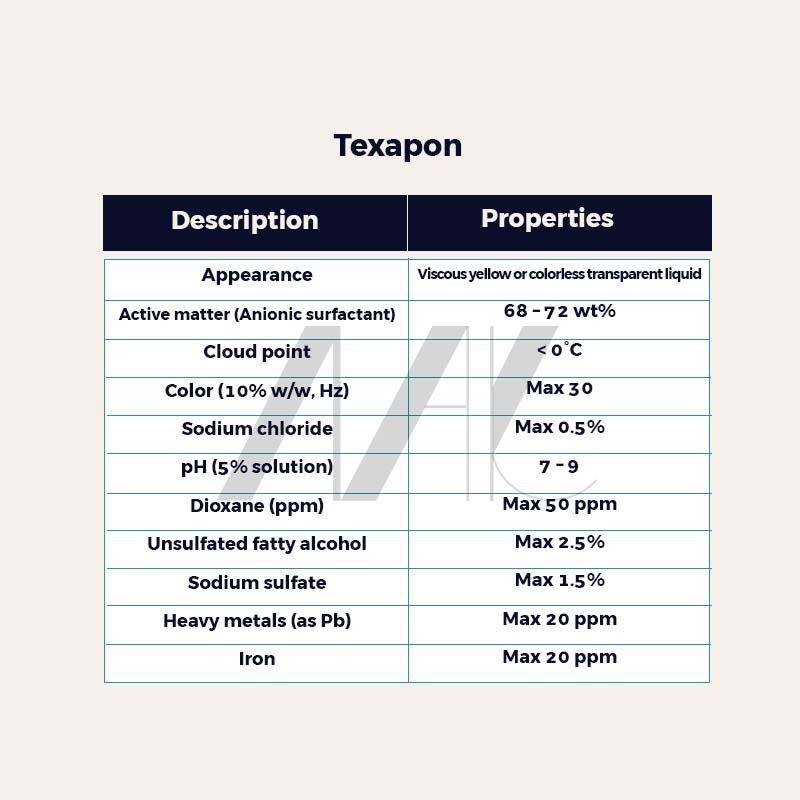
Texapon (SLES 70%)
Texapon, or Sodium Laureth Sulfate (SLES), is one of the most widely used raw materials in the detergent and hygiene industries. It is produced by reacting a fatty alcohol (such as coconut oil) with ethylene oxide, followed by sulfonation. Its strong cleansing ability and high foaming power are its key characteristics.
Applications
• Used in the production of household detergents such as dishwashing liquids, shampoos, and liquid soaps
• Used in cosmetic and personal care products such as creams, lotions, toothpaste, and cleansing gels
• Applied in industrial cleaners such as floor cleaners, degreasers, and car wash detergents
• Used in more than 90% of body and hair cleansing products
Urea
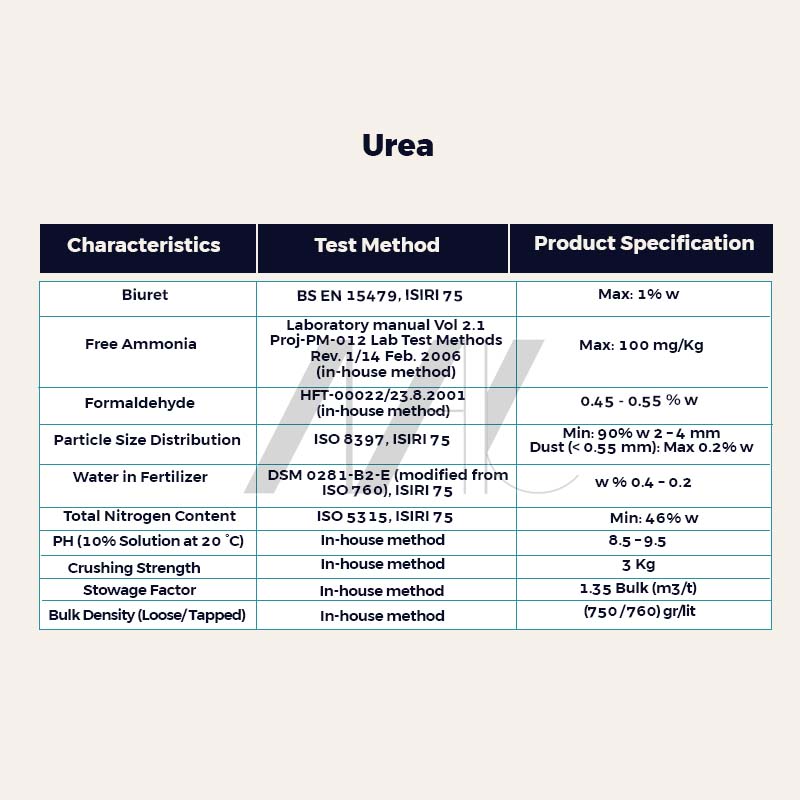
Urea, known by the chemical formula CO(NH₂)₂, is one of the most widely used nitrogen fertilizers in the world. It is a white, odorless, water-soluble solid and is used as a rich source of nitrogen in agriculture. The nitrogen in urea plays a vital role in the growth and development of plants, especially in increasing greenness and yield of crops.
Urea Features:
• High nitrogen percentage: Contains about 46% pure nitrogen, the highest percentage among all nitrogen fertilizers.
• Can be used in all types of soil and climate
• High solubility in water
• No impurities harmful to plants
Applications:
• Agricultural fertilizer: The most common use of urea is as a fertilizer, which is used in wheat, rice, corn, vegetables and other crops.
• Chemical industry: In the production of resins, plastics, adhesives and even cosmetics.
• Exhaust gas purification (SCR): In automotive and industrial emission reduction systems.