
Bitumen
Bitumen is a black, sticky, and waterproof hydrocarbon material that is obtained from the refining of crude oil or is naturally occurring. Due to its properties such as high adhesion, resistance to impact, thermal durability, and acceptability, bitumen has a special place in industries. Especially in road construction, insulation, and industrial production.
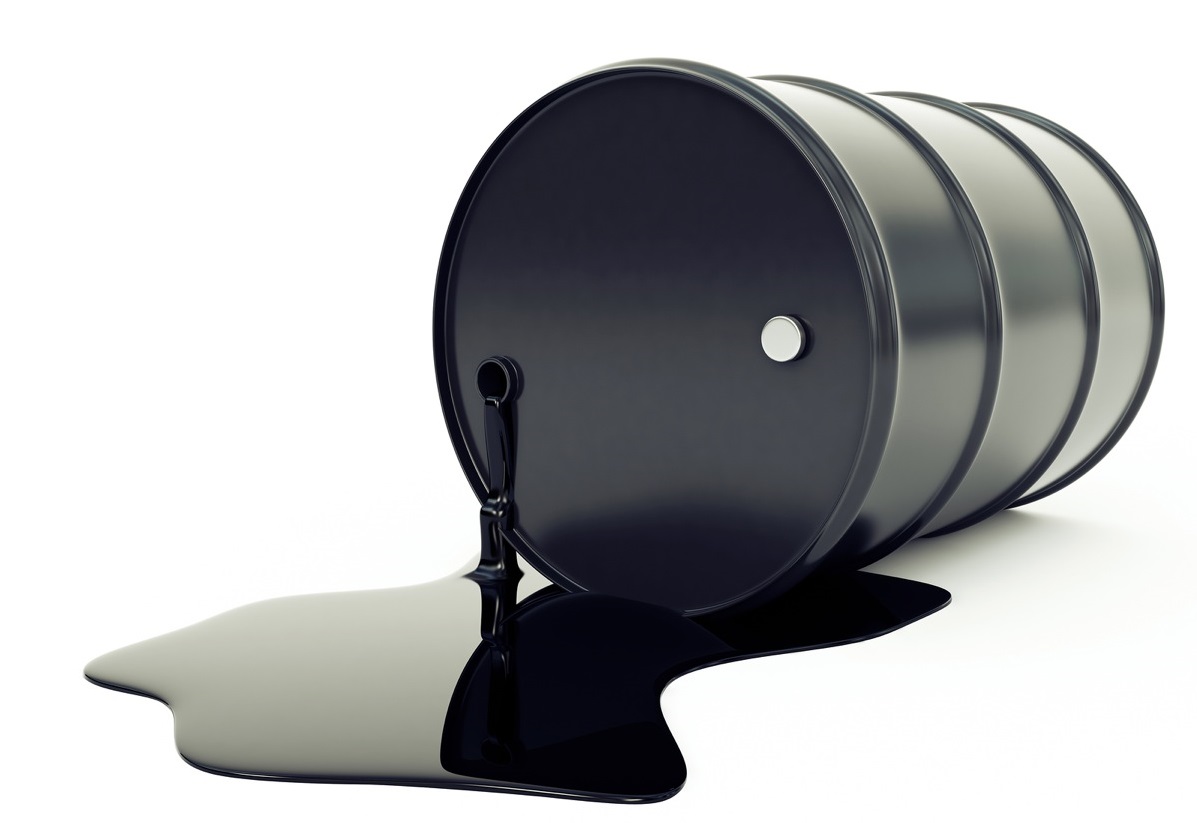
Penetration Grade Bitumen
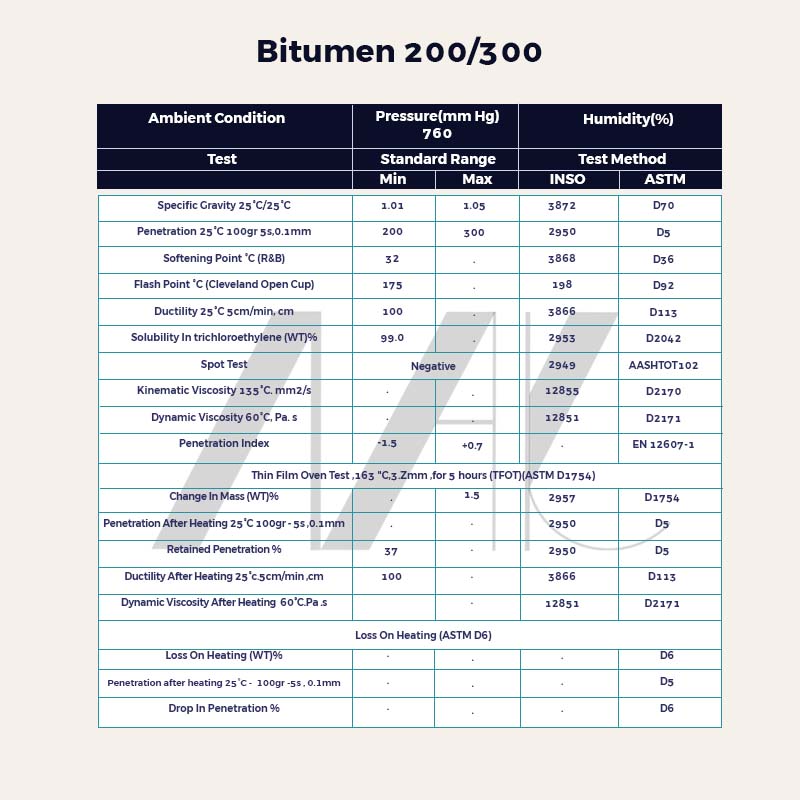
Bitumen 200/300
Bitumen 200/300 is a type of semi-hard bitumen that is mainly used in the construction industry, especially in the production of asphalt and road surface coatings. This type of bitumen is very popular in construction and road construction projects due to its special characteristics.
Physical Properties :
- The penetration degree of bitumen 200/300 is usually between 20 and 30 mm. This number indicates the stiffness and flexibility of the bitumen at different temperatures.
- The softening point of this bitumen is usually between 50 and 60 degrees Celsius. This property allows the bitumen to become softer at high temperatures and harder at low temperatures.
Applications :
- Asphalt: Bitumen 200/300 is mainly used in the production of asphalt for roads, highways and airport runways.
- Insulation: This bitumen is also used as insulation in various buildings and structures.
- Production of modified bitumen: Bitumen 200/300 is also used in the production of modified bitumen and emulsion bitumen.
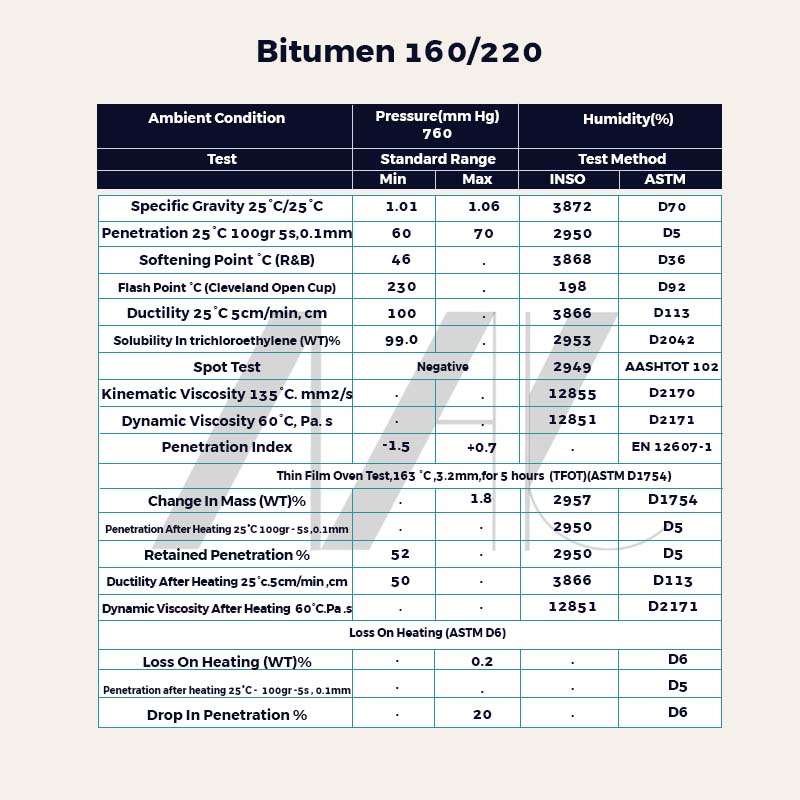
Bitumen 160/220 :
Definition and Application :
Bitumen 160/220 is a type of semi-hard bitumen that is mainly used in the construction industry, especially in the production of asphalt and road surface coatings. This type of bitumen is of great interest in construction and road construction projects due to its special characteristics.
Physical Properties :
- The penetration degree of bitumen 160/220 is usually between 16 and 22 mm. This number indicates the hardness and flexibility of the bitumen at different temperatures.
- The softening point of this bitumen is usually between 45 and 55 degrees Celsius. This property allows the bitumen to become softer at high temperatures and harder at low temperatures.
- Asphalt Construction: Bitumen 160/220 is mainly used in the production of asphalt for roads, highways and airport runways.
- Insulation: This bitumen is also used as insulation in various buildings and structures.
- Production of Modified Bitumen: Bitumen 160/220 is also used in the production of modified bitumen and emulsion bitumen.
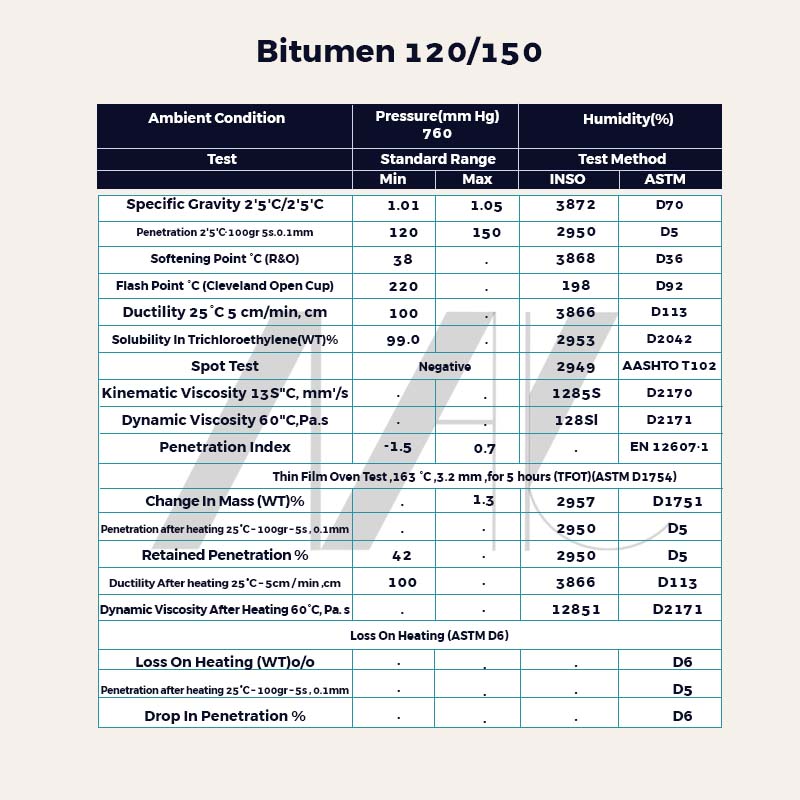
Bitumen 120/150:
Bitumen 120/150 is a type of semi-hard bitumen that is mainly used in the construction industry, especially in the production of asphalt and road surface coatings. This type of bitumen is very popular in construction and road construction projects due to its special characteristics.
Physical Properties :
- Penetration: The penetration of bitumen 120/150 is between 12 and 15 mm. This number indicates the stiffness and flexibility of the bitumen at different temperatures.
Softening Point: The softening point of this bitumen is usually between 38 and 48 degrees Celsius. This property allows the bitumen to become softer at high temperatures and harder at low temperatures.
Applications :
• Asphalt: Bitumen 120/150 is mainly used in the production of asphalt for roads and highways.
- Insulation: This bitumen is also used as insulation in various buildings and structures.
- Production of modified bitumen: Bitumen 120/150 is also used in the production of modified bitumen and emulsion bitumen.
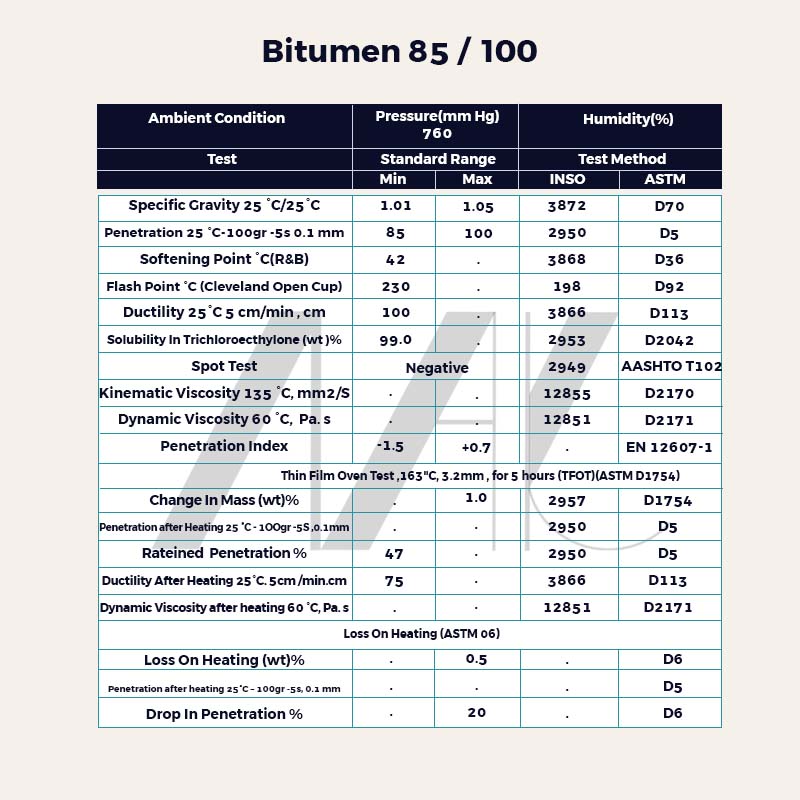
Bitumen 85/100 :
Bitumen 85/100 is a type of semi-hard bitumen that is used as a raw material in the production of asphalt and road surface coatings.
This bitumen is widely used in road construction and repair due to its special properties.
Penetration:
The penetration of bitumen 85/100 is between 8.5 and 10 mm.
This property indicates the hardness and flexibility of the bitumen at different temperatures.
Softening point:
The softening point of this bitumen is between 45 and 52 degrees Celsius.
This property allows the bitumen to become softer at high temperatures and harder at low temperatures.
Production Method:
85/100 bitumen is produced by refining crude oil and passing hot air through a vacuum bottom.
This process involves breaking down the hydrocarbons and extracting the remaining crude oil.
Physical Properties:
85/100 bitumen is thermoplastic, meaning it softens when heated and hardens when cooled.
This bitumen has a very strong viscosity, making it suitable for use in a variety of conditions.
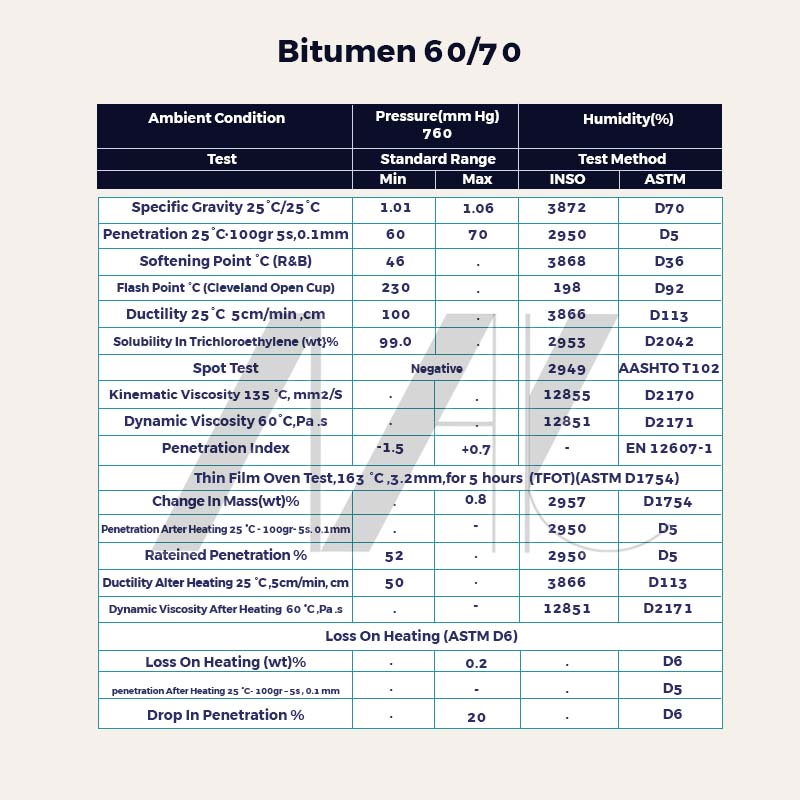
Bitumen 60/70 :
Bitumen 60/70 is a type of penetrating bitumen used as a bitumen product in the construction and road construction industry. This type of bitumen has a permeability of between 60 and 70 tenths of a millimeter, which indicates its viscosity and rheological properties. Bitumen 60/70 is produced through oxidation and vacuum
bottom processes :
- Oxidation: Oxidation of bitumen with air and heat at high temperatures.
- Vacuum Batum: Purification of bitumen using low pressure and high temperature.
Applications :
- Hot asphalt: Bitumen 60/70 acts as one of the main elements of hot asphalt and is responsible for the adhesion and connection of the mixture.
- Climatic regions: Due to its characteristics, this type of bitumen is more suitable for regions with a temperate climate and adapts well to climatic conditions.
- Road coating: Bitumen 60/70 is widely used in the production of asphalt and road surface coating and is considered a suitable option in road construction.
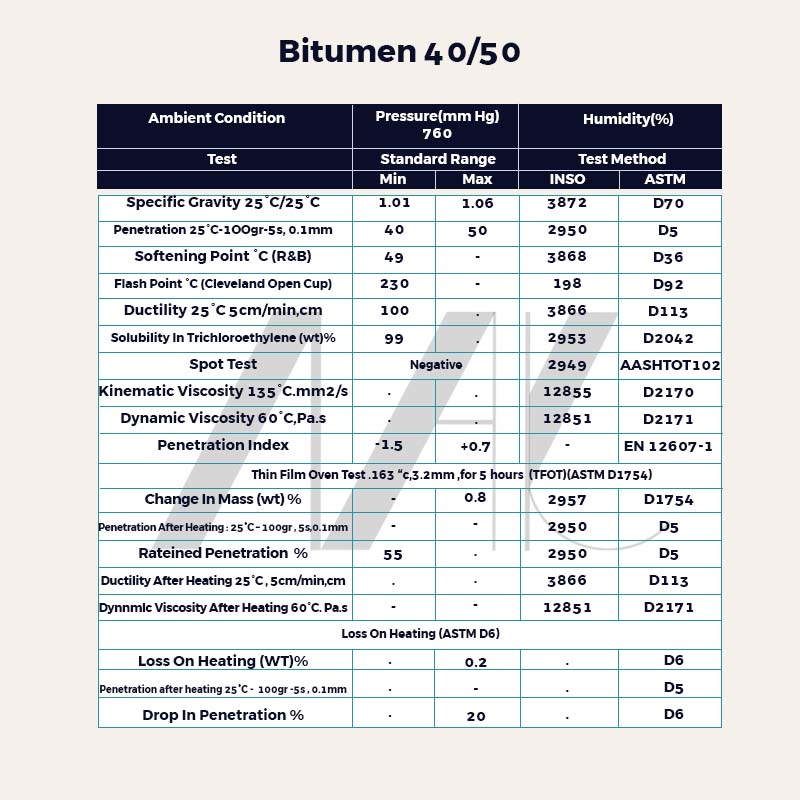
Bitumen 40/50 :
Bitumen 40/50 is a type of penetrating bitumen that is widely used in the construction and road construction industry. Due to its special characteristics, this type of bitumen is used in various projects, including asphalt paving and insulation. In this article, we will examine the characteristics, applications, advantages and important points about bitumen 40/50.
Applications
- Hot asphalt :
40/50 bitumen is used as one of the main components in the production of hot asphalt. This type of asphalt is an ideal option for covering roads and streets due to its good adhesion and high resistance.
- Insulation :
This bitumen is widely used in the insulation of buildings and infrastructure. The waterproof property of 40/50 bitumen makes it a suitable option to prevent moisture penetration.
- Road surfacing :
40/50 bitumen is widely used in road construction and road surfacing projects. Its ability to withstand heavy loads and resist weather conditions makes it a suitable choice for these types of applications.
Cutback Bitumen :
In this type, bitumen is mixed with solvents such as kerosene or gasoline to make it more fluid at ambient temperatures. After application, the solvent evaporates and the bitumen returns to its original state. Cutback bitumen is very suitable for projects that require rapid implementation and in low-temperature areas.
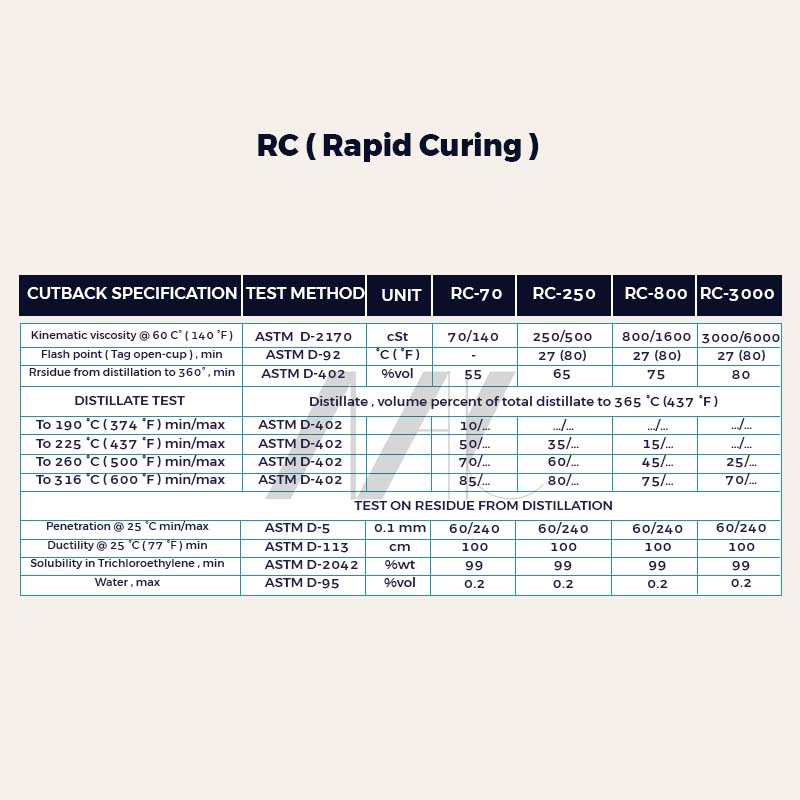
RC (Rapid Curing) :
Rapid Curing liquid bitumen, which is identified by the abbreviation RC, is a liquid cutback bitumen produced with the help of light solvents such as naphtha. After application, the solvent of this type of bitumen evaporates quickly and in a short time, leaving pure bitumen that has the same properties as the original bitumen.
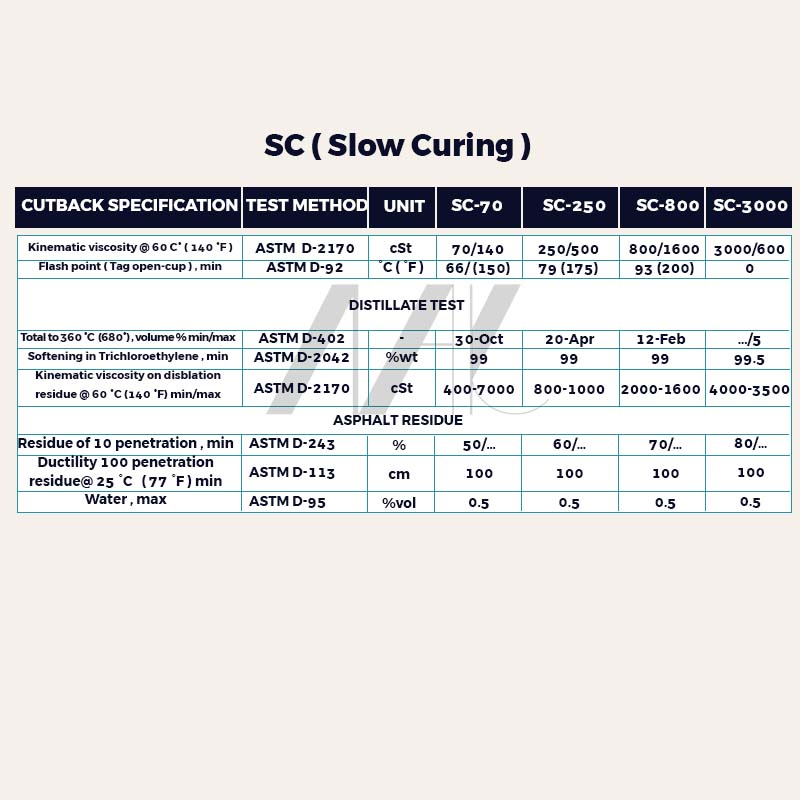
SC (Slow Curing) :
This bitumen, as its name suggests, is much heavier than MC and RC bitumen. Heavy solvents such as diesel and black oil are used to produce this slow-curing bitumen. This bitumen does not evaporate under normal conditions, but undergoes molecular changes.
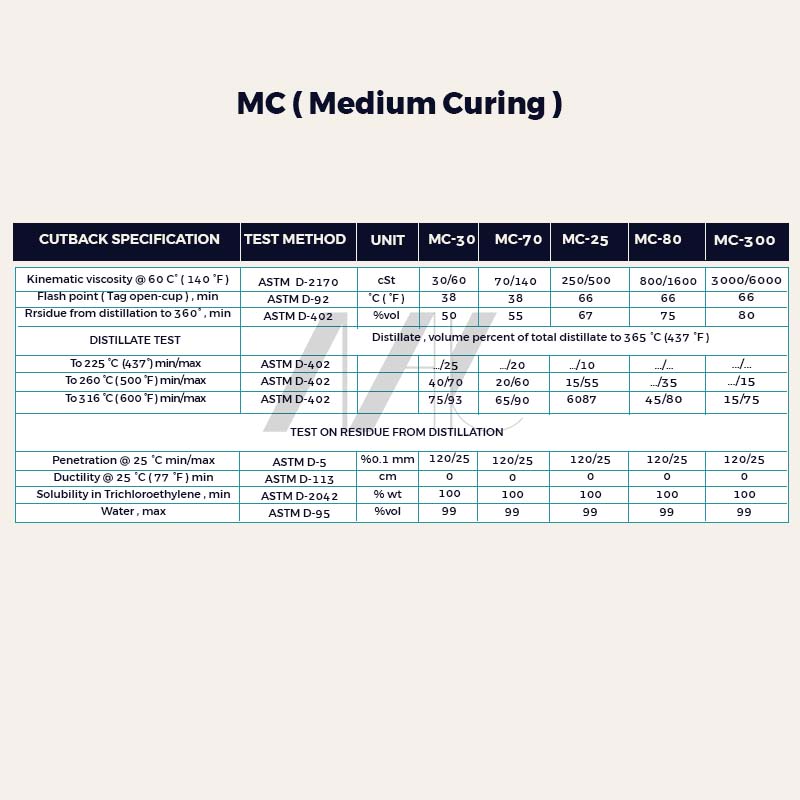
MC (Medium Curing) :
A type of bitumen that uses semi-heavy solvents such as kerosene in its production. The use of petroleum solvents reduces the viscosity of the bitumen, and according to this standard, this value for MC-250 bitumen is between 250 and 500 based on CST at 60 degrees Celsius.
Viscosity Grade Bitumen :
In this model, bitumen is classified based on its viscosity at 60 or 135 degrees Celsius, such as VG-10, VG-30, and VG-40. This classification provides a better understanding of the behavior of bitumen in real road construction conditions and is very common in asphalt paving in hot,
high-traffic areas.
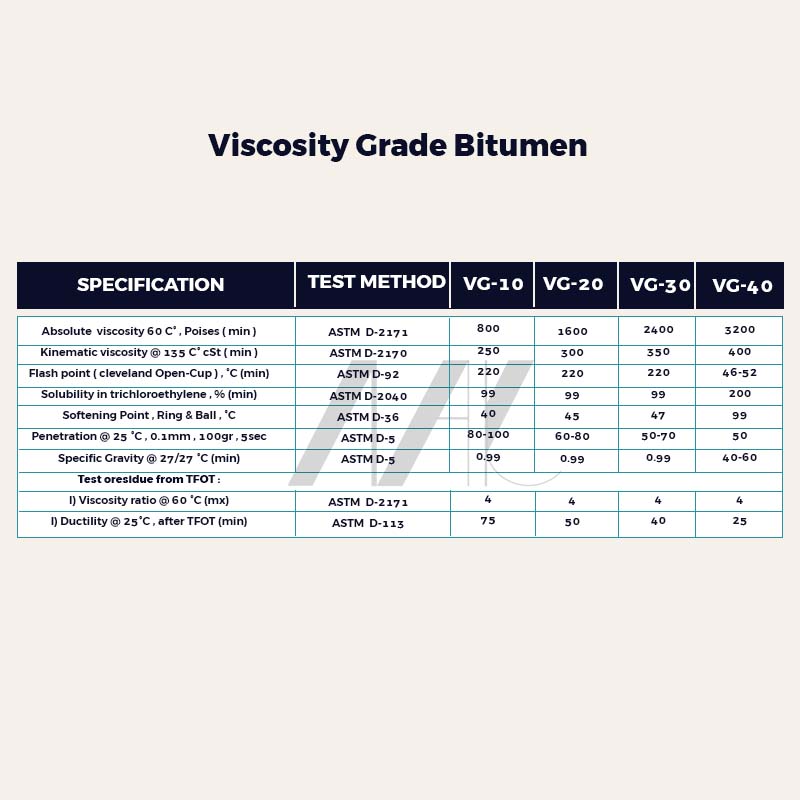
VG-10 :
VG10 grade is widely used in place of 85/100 bitumen in spraying applications such as surface coating and road construction in very cold climates. It is also used to make emulsion bitumen and modified bitumen products.
VG-30 :
Vg30 is primarily used in place of 50/70 bitumen for road construction in severe conditions requiring significant traffic loads .
VG-20 :
VG20 grade is usually used for road construction in cold climates and high altitude areas
VG-40 :
VG40 is used in place of 50/35 bitumen in high traffic areas such as intersections, near toll booths and heavy vehicle parking lots. Due to its higher viscosity, harder bitumen mixtures can be produced to improve resistance to drift and other problems associated with higher temperatures and heavy traffic loads.
Performance Grade Bitumen (PG)
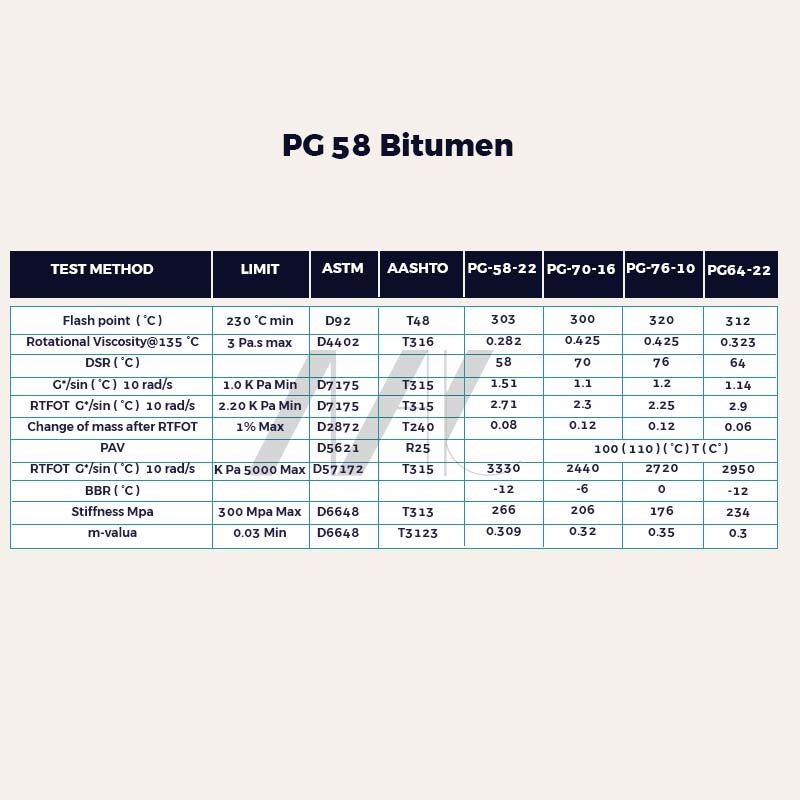
PG 58 Bitumen :
Definition and Application :
PG58 bitumen is a type of performance bitumen specifically designed for use in road and construction projects. The number 58 refers to the maximum performance temperature of this bitumen, which indicates that this bitumen can perform well at temperatures above 58 degrees Celsius. This type of bitumen is usually used in areas with temperate and warm climates.
Physical Properties :
Penetration: Typically between 50 and 70 mm at 25°C.
Softening point: Minimum 46°C.
Density: Typically between 1.01 and 1.03 g/cm3.
Viscosity: Typically around 200 to 300 seconds at 100°C.
Asphalting:
PG58 bitumen is used as one of the main materials in the production of asphalt for roads, highways and airport runways.
PG64 Bitumen :
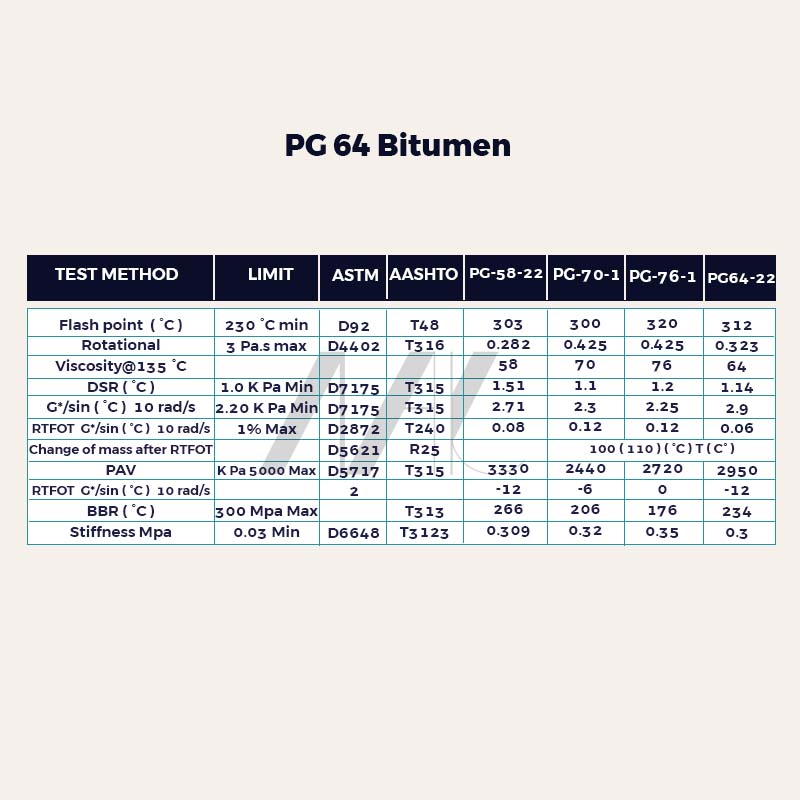
PG64 bitumen is a type of performance bitumen specifically designed for use in road and construction projects. The number 64 refers to the maximum performance temperature of this bitumen, indicating that this bitumen can perform well at temperatures above 64°C.
Physical Properties :
- Penetration Rate: Typically between 40 and 60 mm at 25°C.
- Softening Point: Minimum 46°C.
- Density: Typically between 1.01 and 1.03 g/cm3.
- Viscosity: Typically around 200 to 300 seconds at 100°C.
Applications :
- Asphalt Construction: PG64 bitumen is used as one of the main ingredients in the production of asphalt for roads, highways and airport runways.
- Insulation: This bitumen is also used as insulation in various buildings and structures.
- Production of modified bitumen: PG64 bitumen is also used in the production of modified bitumen and emulsion bitumen.
• Performance at different temperatures : PG64 bitumen performs well at different temperatures due to its physical properties and can provide optimal performance in different weather conditions. - Cracking resistance : This bitumen is well resistant to cracking and deformation at low temperatures.
PG 70 Bitumen :
Definition and Application :
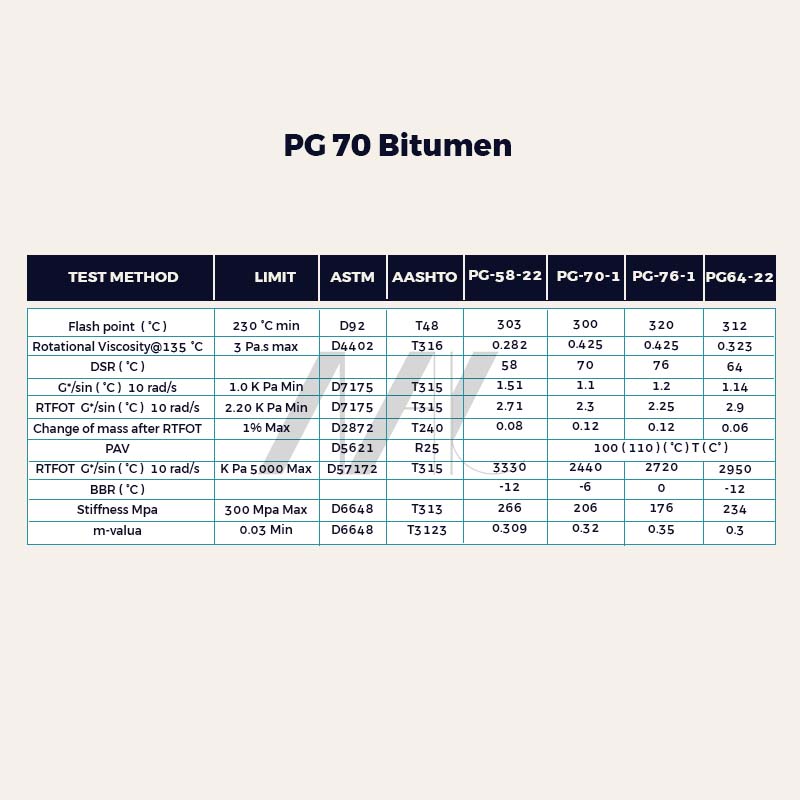
PG70 bitumen is a type of performance bitumen produced from crude oil. Due to its performance grade of 70, this bitumen has good performance at temperatures above 70°C. PG70 bitumen is widely used in construction, road construction and asphalt production.
Physical Properties :
- Penetration Rate : Between 120 and 150 mm at 25°C.
- Softening Point : At least 38°C.
- Density : Between 1.04 and 1.06 g/cm3.
- Viscosity : Between 100 and 150 seconds at 100°C.
Applications :
- Sealing and Insulation:
PG70 bitumen is used as insulation in buildings and structures. - Road construction and maintenance:
This bitumen is used especially in cold regions for road construction and maintenance.
• Asphalt production:
PG70 bitumen is one of the main materials in asphalt production used in road construction.