Organic Materials
Industrial oils are specialized lubricants used in machinery and equipment across various industries to reduce friction, prevent wear, dissipate heat, and protect against corrosion. They play a vital role in ensuring smooth operation, extending the lifespan of machinery, and enhancing overall efficiency.
Glycerin
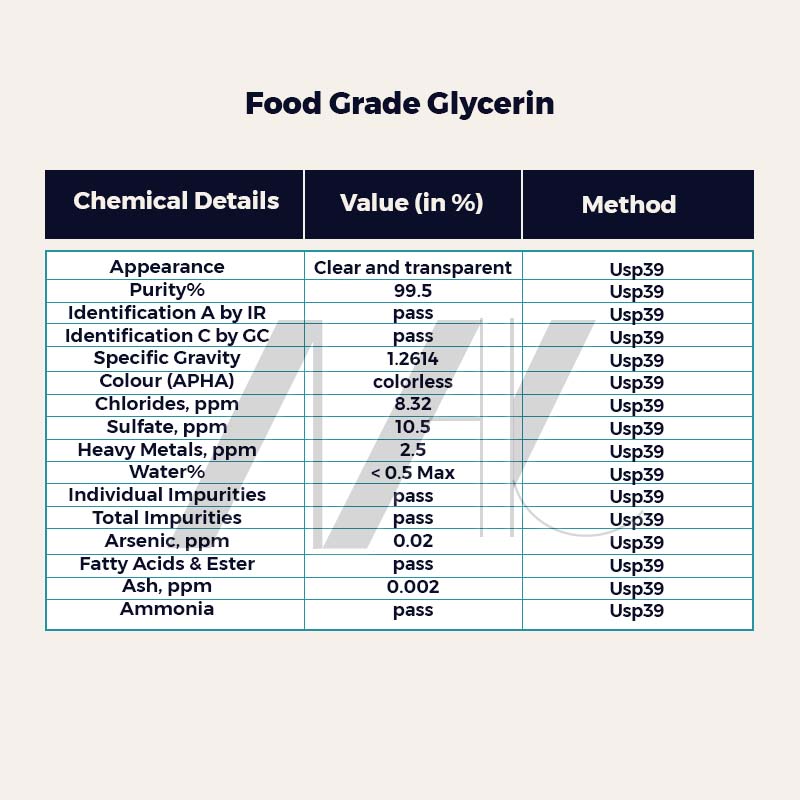
Food Grade Glycerin, often referred to as food-grade glycerol, is an organic compound typically extracted from plant or animal oils. Chemically, it is a trihydric alcohol (glycerol), appearing as a clear, colorless, and odorless liquid.
Production Methods for Food Grade Glycerin:
- Plant-Based Glycerin:
Derived from plant oils such as coconut oil, soybean oil, or palm oil.
Suitable for vegetarians and vegans.
- Animal-Based Glycerin:
Produced from animal fats.
Primarily used in non-food products like soaps and creams, not for edible purposes.
- Laboratory-Synthesized Glycerin:
Manufactured through chemical processes followed by purification.
Suitable for food, pharmaceutical, and industrial applications.
Applications of Food Grade Glycerin
Food & Beverage Industry:
- Humectant: Prevents drying in baked goods and canned foods.
- Natural Sweetener: Sugar substitute in low-calorie products.
- Filler: Enhances texture in low-fat biscuits and snacks.
- Thickening Agent: Adds viscosity to beverages and sauces.
- Solvent: Dissolves flavorings and food colorings.
- Plant Preservation: Mixed with water to preserve plant leaves.
Cosmetics & Personal Care:
- Emulsifier: Stabilizes mixtures in lotions and creams.
- Moisturizer: Key ingredient in natural soaps and skincare products.
Pharmaceuticals:
- Suppositories & Ointments: Enhances drug absorption and texture.
- Cough Syrups: Acts as a solvent and soothing agent.
Chemical Industry:
- Additive: Used in producing propylene glycol and polyurethane foams.
- Paints & Resins: Improves flexibility and durability.
Tobacco Industry:
- Moisture Retention: Prevents tobacco leaves from drying.
Animal Feed:
- Feed Quality Enhancement: Boosts nutritional value and digestibility.
Oleic acid
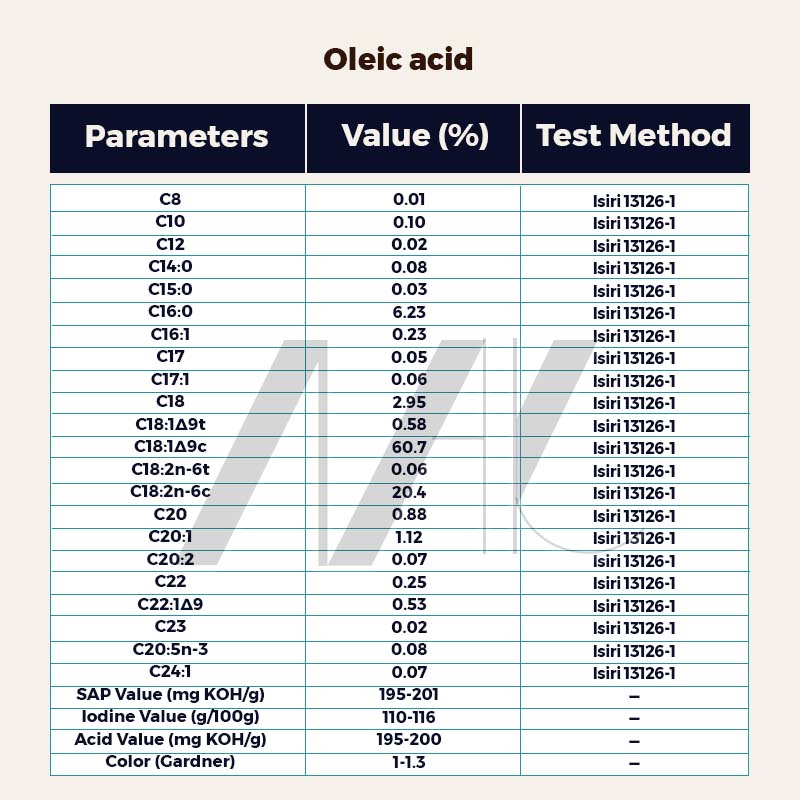
Oleic acid is one of the most important unsaturated fatty acids found in many plant and animal oils. The Latin name “oleic acid” is derived from the Latin word “oleum” (meaning “oil”), as researchers first isolated it from olive oil in 1823. Structurally, oleic acid is an unsaturated fatty acid with a double bond between carbons. This double bond significantly influences its physical and biological properties.
Oleic acid typically appears as a pale yellow or yellowish-brown liquid, though its color may vary due to impurities or oxidation. It remains in liquid form at room temperature because the double bond in its structure prevents tight molecular packing, resulting in lower density.
This fatty acid is widely used in industries such as cosmetics, food, and pharmaceuticals due to its stability, emollient properties, and role in reducing LDL (“bad”) cholesterol. Its ability to remain liquid at lower temperatures makes it a key component in products like soaps, lubricants, and dietary supplements .
Applications of Oleic Acid
Food Industry
- Acts as a natural emulsifier (combining water and oil) in sauces, mayonnaise, and similar products.
- Enhances freshness and extends shelf life of food items.
Pharmaceutical Industry
- Used as a safe solvent in drug formulations due to its skin compatibility.
- Improves skin absorption and promotes healing in wound care products (e.g., ointments).
Cosmetic Industry
- Key ingredient in creams, lotions, and hair conditioners for its moisturizing properties.
- Provides a lightweight, smooth texture in makeup (lipsticks, foundations) and skincare products.
Product Features
- High-Purity Formulation: ≥99% refined oleic acid (CAS 112-80-1), ideal for demanding applications in food, cosmetics, and pharmaceuticals.
- Flexible Packaging: Available in 180 kg drums or 1000 L IBC tanks, optimized for safe storage and efficient logistics.
- Certified Quality: Compliant with FDA, ISO 9001, and Halal standards, ensuring global acceptability and safety.
Soybean Fatty Acid
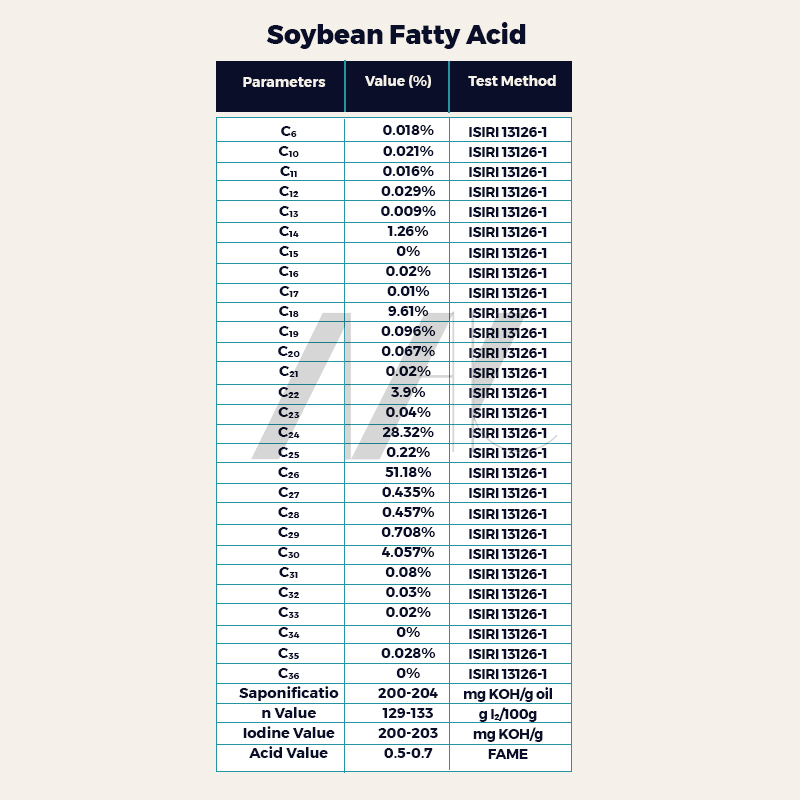
“Crude soybean oil is hydrolyzed under pressure and temperature to convert it into fatty acid and glycerin. The obtained crude fat is then fully dehydrated and fed into a distillation tower. After separating light materials and heavy bottom substances, the final product is Grade 1 Soy Fatty Acid – a pale yellow, transparent substance that typically remains liquid at room temperature. This material is rich in linoleic acid with a smaller amount of oleic acid, used in various fields including industrial and food applications.”
Application
• Lubricants
• Cosmetics
• Soaps & detergents
• Textile industry
• Industrial coatings
• Resin production
• Surfactants
• Paints
Key Features
• High C₂₆ (51.18%) and C₂₄ (28.32%) content
• Acid Value: 200-203 mg KOH/g
• Very light color (Gardner 0.5-0.7)
• Liquid at room temperature